My Story — Stuart Bentley
Osteopath, Personal Trainer and lifelong sports enthusiast
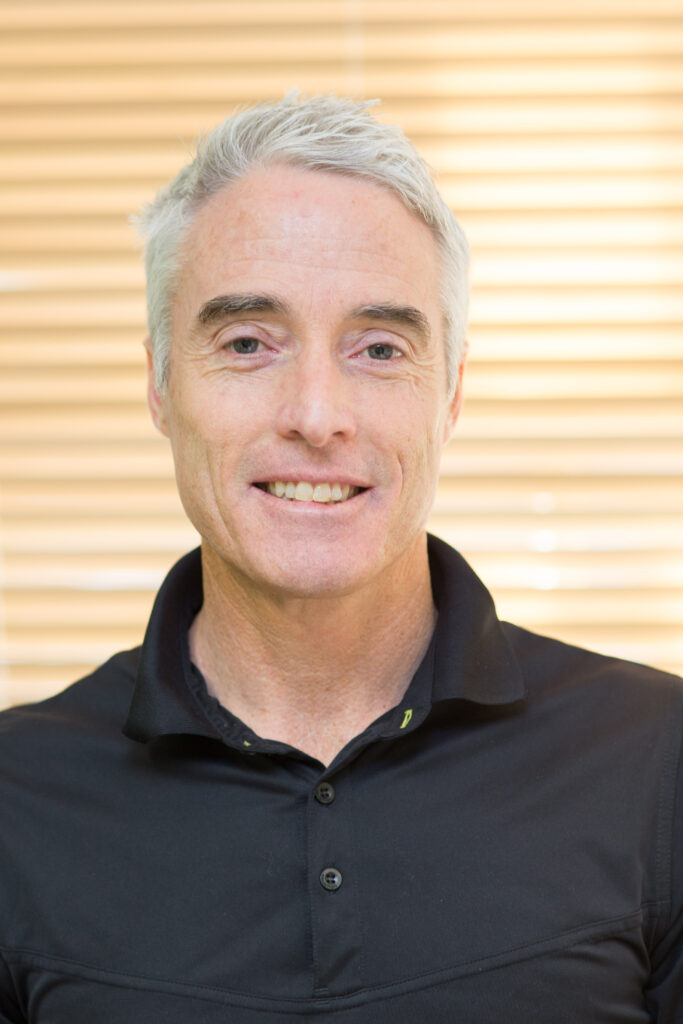 From South Africa to North Yorkshire
I grew up in Port Elizabeth, South Africa, the middle of three boys in a family where sport was a big part of everyday life.
With almost permanent sunshine and plenty of space to run around, we spent most of our childhood outdoors. If there was a ball to hit, kick or throw, I was usually involved.
My dad played football and hockey, and I followed in his footsteps. I played club football and was fortunate enough to represent South Africa in hockey at schoolboy and Under-21 level, eventually being selected for the senior men’s squad and playing four international matches against South American opposition.
After completing a master’s degree in Organic Chemistry, I decided that rather than settle into a conventional career, I’d spend some time travelling.
That turned into almost three years exploring Africa, North America, Australia, New Zealand and Europe before eventually settling in the UK.
Not quite the career path I’d originally imagined!
So how did I end up becoming an osteopath?
My interest in healthcare actually began when I was about 15.
I’d injured myself playing hockey and received treatment from a chiropractor. I was fascinated by how the body worked and how treatment could help someone recover from an injury.
That experience stayed with me.
After my travels, I decided to change direction and enrolled at the British School of Osteopathy in London, graduating with a BSc (Hons) in Osteopathy in 1998.
A job opportunity subsequently took us from Hampshire to North Yorkshire, where we knew a few friends. We thought we’d give it a go.
More than 27 years later, I’m still here!
I’ve spent much of my professional life treating patients across North Yorkshire and the Teesside area, and now also have a clinic in Haxby, York, where we live.
It’s been a fascinating career, and one of the things I’ve enjoyed most is getting to know patients, understanding their problems and helping them return to the activities they enjoy.
Sport, family and a couple of troublesome knees
Although I stopped playing competitive hockey in my early twenties, sport has always remained important to me.
I played five-a-side football well into my 50s, partly because I wanted to share the pitch with my son.
Unfortunately, while I was getting slower, he was getting considerably faster. We did manage a few years playing together, though, which was brilliant.
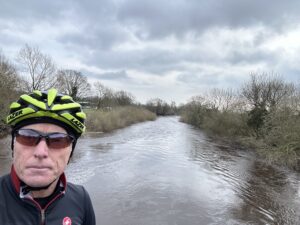
I’ve also enjoyed tennis, running, cycling and walking in the Yorkshire Dales and Lake District. These days I play tennis once a week, do some strength training, Pilates and running, and get out on the bike more during the summer.
However, my sporting career hasn’t been entirely injury-free.
In 2010, I was persuaded — against my better judgement — to take part in a dads’ rugby match.
Fifteen minutes later, I’d torn the anterior cruciate ligament (ACL) in my knee.
Not my finest sporting decision.
That injury involved surgery and a lengthy rehabilitation before I could return to playing sport.
Unfortunately, I also managed to injure the ACL in my other knee while playing football in my 50s.
You’d think I’d have learnt my lesson!
This time, I spent a considerable period trying to manage the injury through rehabilitation, strength training and exercise. I was determined to stay active and avoid another operation if possible.
Eventually, however, I underwent a second ACL reconstruction in December 2025.
So I’ve experienced rather more of the rehabilitation process than I might have wished.
 What being injured taught me
One thing I’ve learnt is that recovering from injury isn’t always a straightforward journey.
There are good weeks, frustrating weeks and occasionally weeks when you wonder whether you’re getting anywhere at all.
When you’re used to being active, suddenly finding that you can’t do the things you enjoy can be surprisingly difficult.
I certainly wasn’t always the easiest person to live with during those periods. I’m sure my family would agree!
But I’ve also been fortunate to have excellent people helping me through rehabilitation, including physiotherapists who understood both the physical demands of recovery and the importance of encouragement and reassurance.
Sometimes what you need isn’t another exercise or treatment.
It’s someone who can explain what’s happening, help you recognise your progress and remind you that setbacks don’t necessarily mean you’re going backwards.
Those experiences have probably influenced the way I practise osteopathy as much as anything I’ve learnt in a classroom.
Why I combine osteopathy with strength and rehabilitation
Over the years, my approach to treating patients has evolved.
I still value hands-on osteopathic treatment. It can be an important part of helping people manage pain and improve movement.
But I’ve increasingly come to appreciate that treatment alone isn’t always enough.
If someone has recurring back pain, a troublesome shoulder, a sports injury or simply finds that everyday activities are becoming more difficult, I want to help them understand what’s going on and what they can do about it.
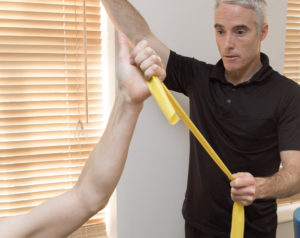
That’s one of the reasons I qualified as a Level 3 Personal Trainer and developed a particular interest in exercise rehabilitation and strength training.
For some patients, the priority is getting out of pain and moving comfortably again.
For others, it’s returning to tennis, golf, running, gardening or walking in the countryside.
And sometimes it’s simply about maintaining the strength and mobility to enjoy life as we get older.
You certainly don’t need to be sporty to come and see me.
I believe the best approach is one that suits the individual, combining appropriate treatment, practical advice and exercise when it’s helpful.
 Treat the cause. Stay strong.
After more than 27 years in practice, I still enjoy the challenge of working out what’s troubling someone and finding a sensible way forward.
I like to take the time to listen, explain what I think is happening and involve patients in decisions about their treatment.
I’m not particularly interested in making grand promises or suggesting there’s a quick fix for everything.
Sometimes recovery is straightforward. Sometimes it takes patience, persistence and a bit of hard work.
Having been on both sides of the treatment couch, I appreciate that.
Ultimately, my aim is quite simple: to help you move more comfortably, recover from injury where possible and maintain the strength and confidence to keep doing the things you enjoy.
And hopefully avoid a few of the sporting mistakes I’ve made along the way!
Stuart Bentley
Treat the cause. Stay strong.
Qualifications and professional training
-
BSc (Hons) Osteopathy — British School of Osteopathy, London, 1998
-
Registered with the General Osteopathic Council
-
Level 3 Personal Trainer
-
Niel-Asher technique training for frozen shoulder
-
APPI Pilates Level 1
-
Ergonomics and workstation assessment
-
Kinesiology taping
Clinics and appointments
I offer osteopathic assessment, treatment and rehabilitation in Haxby, Stockton-on-Tees and Bedale.